Kojic acid and retinol act at two different points in the same process, which is why treating them as rivals usually leads to the wrong choice. Kojic acid works upstream: it interferes with tyrosinase, the enzyme that starts melanin production, so less new pigment is made. Retinol works downstream: it accelerates cell turnover so already-pigmented cells reach the surface and shed sooner, while improving texture over months. They are complementary, and most people get more from using both carefully than from picking a side.
Kojic acid: limiting pigment before it forms
Melanin is assembled by an enzyme called tyrosinase inside pigment-producing cells. UV exposure, heat, friction and inflammation all push those cells to work harder, which is why marks cluster on the cheeks, on the backs of the hands, and on areas that rub — elbows, knees, underarms, knuckles.
Kojic acid, produced by fungal fermentation, binds copper. Tyrosinase depends on copper to function, so the enzyme slows down and less pigment is deposited into the skin above. The practical consequence is that kojic acid is preventive more than corrective. It reduces how much new pigment arrives; it does not lift out what is already sitting in your skin.
That explains the frustrating first few weeks. Nothing appears to happen, because the spots you can see still have to be shed on their own schedule. Only once the supply of new pigment slows does the balance start to shift. There is more on that timeline in our explainer on whether kojic acid actually works on dark spots.
Kojic acid can irritate, and a minority of people develop contact sensitivity to it — itching, rash or persistent redness rather than simple dryness. Patch test on a small area for a few days before using it more widely, and keep contact time short.
Retinol: clearing pigment that already exists
Retinol is a vitamin A derivative. Skin converts it, in a couple of enzymatic steps, into retinoic acid — the form that binds receptors in the cell nucleus and changes how skin cells behave. Two of those changes matter for tone. Turnover speeds up, so pigmented cells move to the surface and shed instead of lingering. And the transfer of pigment granules from melanocytes into surrounding skin cells becomes less efficient, so pigment spreads less readily.
Retinol also does work that kojic acid does not. Over months it supports collagen and thickens the living layers of skin, which is why texture, dullness and fine lines tend to improve alongside tone. It is the more demanding ingredient of the two: dryness, flaking, stinging and redness in the first weeks are common, and pushing through aggressively usually costs more time than starting gently would have.
Anyone pregnant or breastfeeding is generally advised to avoid retinol and other vitamin A derivatives, and should ask their doctor before using any product that contains it. That applies to rinse-off formats too — ask first rather than assuming a short contact time settles the question.
Retinol vs kojic acid at a glance
| Kojic acid | Retinol | |
|---|---|---|
| Mechanism | Slows tyrosinase, the enzyme that builds melanin, so less new pigment forms | Speeds cell turnover so pigmented cells shed; limits pigment transfer between cells |
| What it changes first | New marks stop deepening; overall tone looks steadier | Texture and smoothness, then existing marks looking lighter |
| Speed | Weeks before anything is visible; months for meaningful evenness | Slower still — a full turnover cycle is the minimum, several months is realistic |
| Irritation potential | Moderate; can cause contact sensitivity in some people | Higher, especially in the first four to six weeks |
| Best suited to | Skin that keeps making new marks — after breakouts, sun, friction | Older marks on stable skin, plus texture and early lines |
| Pregnancy and breastfeeding | Discuss with your doctor, as with any active | Generally advised to avoid; ask your doctor |
| Usual format | Cleansing bars, washes, serums — often short-contact | Leave-on serums and creams, used at night |
Which one to start with
If your main complaint is that new marks keep appearing — after a spot heals, after a summer, on areas that rub — start with kojic acid and sun protection. There is little point clearing pigment faster than you are producing it.
If your skin is stable and the problem is old marks plus texture, dullness or fine lines, retinol earns first place. It is doing several jobs at once, and it is the one that keeps working on the things brightening ingredients cannot touch.
Whichever you begin with, broad-spectrum sunscreen every morning is the part that decides the outcome. Unprotected UV is the single biggest reason dark spots return, and it will comfortably outpace both ingredients if you skip it. A wider view of what belongs in a pigmentation routine is set out in our guide to the ingredients worth using for hyperpigmentation.
One caveat that has nothing to do with cosmetics: a spot that appears suddenly, changes shape or colour, has irregular borders or looks much darker than the rest should be checked by a doctor before you put anything on it. That is ordinary caution, not cause for alarm.
How to use both without wrecking your barrier
- Introduce one at a time. Give the first ingredient three to four weeks before adding the second. If something stings, you want to know which thing caused it.
- Separate them by time of day. Kojic acid at the cleansing step, retinol at night on dry skin. Layering two actives back to back on the same skin is where most barrier damage starts.
- Build frequency slowly. Retinol two nights a week, increasing only once your skin is calm the next morning. Kojic acid once daily at most to begin with.
- Keep everything else boring. No scrubs, no acid toners, no strong exfoliants while you are adjusting. Plain moisturiser and sunscreen do the supporting work.
- React to signals, not schedules. Tightness, flaking or a burning sensation on application means pause for a few days, moisturise, then restart less often.
Why lumēa's bar keeps both on a short leash
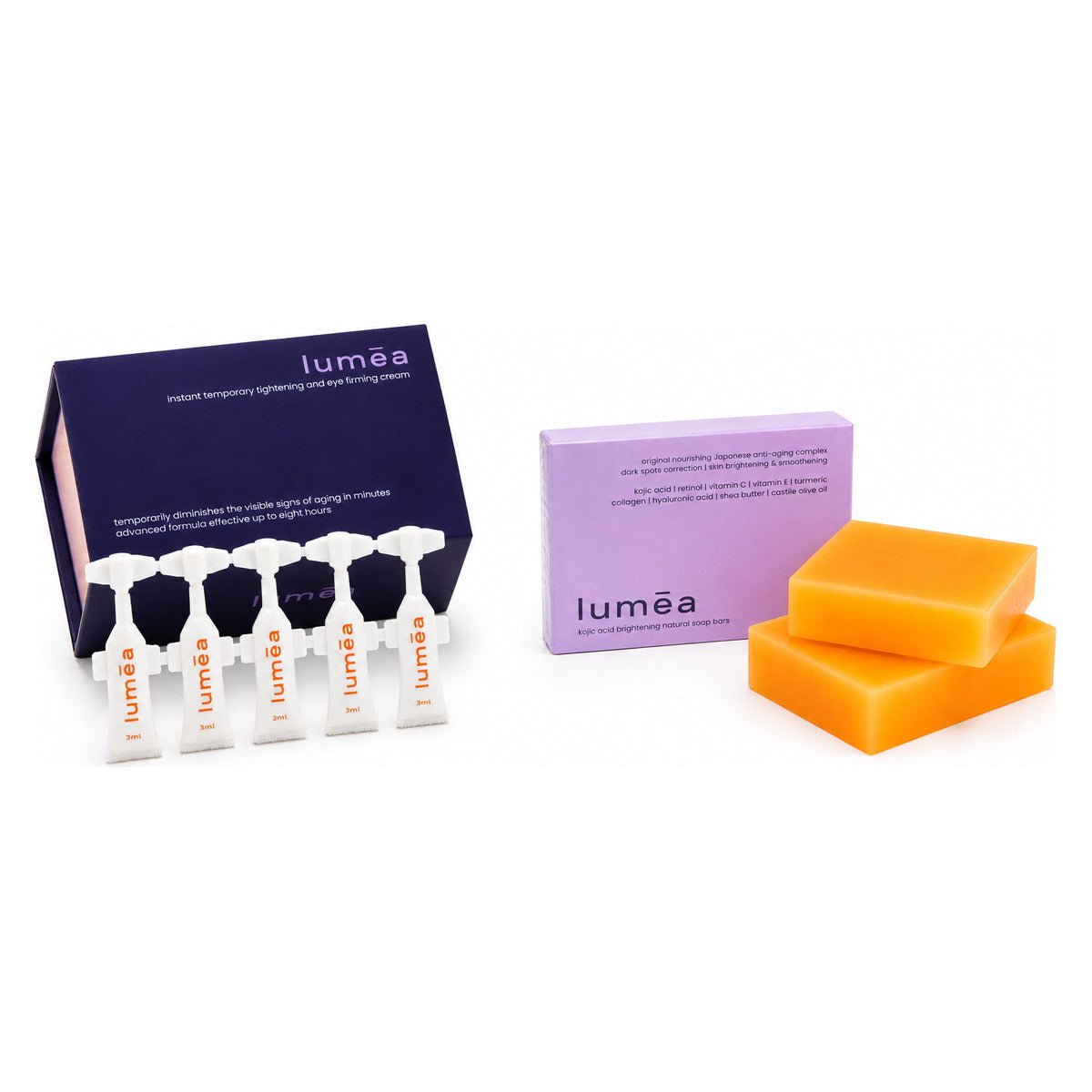
Our Dark Spot Remover cleansing bar contains kojic acid and retinol together, alongside hyaluronic acid, collagen, vitamin C, vitamin E, turmeric, shea butter and olive oil in a castile base. Putting both actives into a rinse-off format is a deliberate decision about exposure: contact time stays short, so the skin gets the ingredients without hours of continuous leave-on contact from two irritants at once.
Use it the way it is designed. Lather on damp skin, leave for roughly 30 seconds, rinse thoroughly, then moisturise. Never leave a cleansing bar sitting on skin for minutes in the hope of faster results — that is how irritation starts, and irritated skin makes more pigment, not less. Patch test first, start every other day, and give it weeks before judging it.
Frequently asked questions
Can I use retinol and kojic acid on the same day?
Most people can, once both are already tolerated separately. Use kojic acid at the cleansing step and retinol at night on clean, dry skin. What causes problems is applying both as leave-on products in the same session, or starting them in the same week.
Which one works faster?
Kojic acid usually shows something first, because slowing new pigment production changes the picture within weeks. Neither is fast. Pigmentation fades on the skin's own turnover schedule, and meaningful change is measured in months.
Can I use the bar if I am pregnant or breastfeeding?
It contains retinol, and people who are pregnant or breastfeeding are generally advised to avoid vitamin A derivatives. Ask your doctor before using it. If they advise against retinol, a plain cleanser plus daily sunscreen is a reasonable holding position.
Will kojic acid lighten my natural skin tone?
It reduces new pigment production wherever it is applied, so overall tone can look slightly brighter and more even. It is not a bleach, and the effect is not permanent — stop using it and unprotected sun exposure will bring pigment back.
My skin is stinging and flaking. What now?
Stop both actives for several days and use only a gentle cleanser, a plain moisturiser and sunscreen. Reintroduce one ingredient at lower frequency. If you get persistent itching, a rash or swelling rather than simple dryness, that suggests sensitivity — stop and speak to a doctor.
Do I need vitamin C as well?
It is optional. Vitamin C is an antioxidant that works well in the morning under sunscreen and pairs sensibly with both ingredients. Add it later, not at the same time as everything else, so you can tell what your skin is responding to.