A dark spot is a patch of skin where pigment-producing cells have made more melanin than the skin immediately around them. Cumulative ultraviolet exposure is responsible for the majority of facial dark spots; most of the rest come from inflammation after acne or injury, hormonal patterns, decades of accumulated sun on older skin, and repeated friction or heat. All of them fade slowly, and all of them return if the skin keeps meeting whatever caused them in the first place.
What a dark spot actually is
Melanin is not a flaw in the system. It is a pigment your skin manufactures deliberately, and it is one of the better pieces of engineering in the body. Melanocytes sit along the base of the epidermis, each one serving a cluster of surrounding skin cells. When those cells register a threat — ultraviolet light, heat, inflammation — the melanocyte increases production of an enzyme called tyrosinase, which converts the amino acid tyrosine into melanin. The finished pigment is packaged into small granules, handed to neighbouring cells, and arranged as a cap over each cell nucleus. It is a physical parasol held above your DNA.
A dark spot is that defence left switched on in one area. Either the melanocytes there have become over-reactive and keep producing after the trigger has gone, or pigment has dropped from the epidermis into the deeper dermis, where it simply sits.
Depth is the single most useful thing to understand, because it predicts how a spot will behave. Pigment held in the upper layers usually looks tan to mid-brown with a reasonably defined edge, and it responds to topical care and normal cell turnover. Pigment that has settled deeper tends to look greyer, bluer or more diffuse, with a soft edge, and is far more stubborn — nothing applied to the surface reaches it easily. This is why honest timeframes for pigmentation are measured in months rather than days.
Sun exposure: by far the largest cause
Most facial pigmentation is ultraviolet-driven, including pigmentation that something else started. A tan is not a separate phenomenon from a dark spot — it is the same melanin response, spread evenly. When the response stops being even, you get spots.
The exposure that causes this is rarely the beach. It is incidental and cumulative: the walk to work, the drive, the seat by the window, ten minutes on a balcony, the walk from the car in February. UVA passes through window glass and through cloud, and it is present year-round. Repeated low-level exposure gradually trains the melanocytes in the most exposed areas to fire faster and harder, so the same patches darken sooner each summer and take longer to settle each winter.
That pattern explains the geography. Sun-driven spots cluster on the highest, most forward-facing planes of the face — cheekbones, bridge of the nose, forehead, upper lip, jawline — along with the backs of the hands, the chest and the tops of the shoulders. It also explains the most common frustration in skincare: a brightening routine used without daily sun protection is being undone at roughly the same rate it works.
Marks left behind after acne, injury or irritation
Inflammation is a chemical alarm, and melanocytes are among the cells that answer it. When a spot, a cut, a burn or a rash resolves, the pigment produced during the inflammation can remain long after the original problem has healed. This is post-inflammatory pigmentation, and it is the second most common cause of facial dark spots.
The defining feature is that it is flat. Run a fingertip over it: if the surface is smooth and only the colour has changed, it is pigment. If there is a dent, a pit or a raised ridge, that is scarring — a texture problem that needs a different approach entirely. Common triggers include acne, picking or squeezing, ingrown hairs, waxing, shaving, eczema, insect bites, burns, over-exfoliation and reactions to overly aggressive products.
Deeper skin tones have more active melanocytes as a baseline, so the pigment response to any injury tends to be stronger and to persist longer. That is a difference in behaviour, not fragility. It does mean the sequence matters more: calm the inflammation first, then address the colour.
There is an unhelpful irony worth naming. A brightening routine that leaves skin stinging, flushed and peeling is itself an inflammatory event, and can generate new pigmentation while trying to fade old. Gentler and consistent beats strong and sporadic, every time.
Hormonal patterns, age spots, friction and heat
Hormonal pigmentation
This looks different from the others: larger, softer-edged, map-like patches, often close to symmetrical on both sides of the face. It favours the cheekbones, forehead, upper lip and sometimes the jaw. It is commonly associated with pregnancy, combined hormonal contraception and hormone therapy. The word most people reach for is melasma — but melasma is a clinical diagnosis, made by a doctor or dermatologist after examining the skin, and it is managed medically. Cosmetic products can only influence how skin looks. What is useful to know is that this pattern responds to heat and visible light as well as ultraviolet, which is why it can look worse in hot weather, over a stove, or after a long stretch outdoors even in shade.
Age spots and sun spots
Small, sharply defined, tan to dark brown, and found on skin that has had decades of exposure: temples, cheekbones, hairline, backs of the hands, chest. They are often called age spots, but sun spots is the more accurate name. Skin of the same age that has stayed covered — the inner upper arm is the classic comparison — rarely develops them. They are a record of accumulated exposure rather than of years passing.
Friction and heat
Skin that is rubbed repeatedly thickens and darkens. On the face this shows up where a phone rests against the jaw, where a hand props the chin for hours, or along the edges of glasses. Off the face it is the ordinary reason elbows, knees, knuckles, underarms and inner thighs look darker than the skin around them. Heat contributes independently — very hot showers, hot climates, cooking heat. Because the cause is behavioural, removing the friction is a genuine part of the fix rather than a footnote.
How to tell them apart — and when to have one checked
| Type | Typical look and location | Usual history |
|---|---|---|
| Sun-driven spots | Defined tan-to-brown marks on cheekbones, nose, forehead, hands | Builds gradually; worse after summer |
| Post-inflammatory marks | Flat brown or red-brown, exactly where a spot or injury was | Traceable to a specific breakout, cut or reaction |
| Hormonal patches | Larger, soft-edged, broadly symmetrical across cheeks and upper lip | Often begins with pregnancy or a hormonal change |
| Friction or heat | Diffuse darkening at contact points and on body folds | Matches a repeated habit, garment or heat source |
Treat this as orientation, not diagnosis. The types overlap constantly — a post-acne mark sitting on a cheekbone gets deepened by sun, and hormonal patches are worsened by the same UV that causes sun spots. Separately, and as ordinary caution rather than alarm: any mark that appeared suddenly, is changing in size, shape or colour, has an irregular or blurred border, is noticeably darker than everything else, bleeds, itches persistently, or is one spot that simply does not look like your others should be assessed by a doctor or dermatologist. Skincare is not the right tool for that question.
What actually helps, by cause
One measure applies to every type: daily broad-spectrum sunscreen, SPF 30 or higher, worn on any day you see daylight, reapplied when you are outdoors for extended periods. It is not the supporting act. Without it, the pigment you fade is replaced faster than it clears, and this is the most common reason people conclude that nothing works.
- Post-acne marks: settle the acne first, stop picking, then let turnover do most of the work. Brightening actives shorten the wait; they do not replace the wait.
- Sun spots and age spots: consistency over intensity. Ingredients that slow pigment production and ingredients that speed the shedding of pigmented cells, used together over months.
- Hormonal patterns: the most stubborn and the most prone to returning. Protect against heat and visible light as well as UV — a tinted mineral sunscreen containing iron oxides covers more of that range — and involve a dermatologist rather than escalating products at home.
- Friction and heat: remove the cause. No active ingredient outpaces daily rubbing.
On the ingredient side, the useful actives fall into two groups: those that interfere with tyrosinase, such as kojic acid, vitamin C, alpha arbutin, niacinamide and azelaic acid, and those that accelerate turnover, such as retinoids and alpha hydroxy acids. Our guide to which brightening ingredients do what goes through each one properly, and there is a closer look at how kojic acid works on pigment if that is the route you are considering.
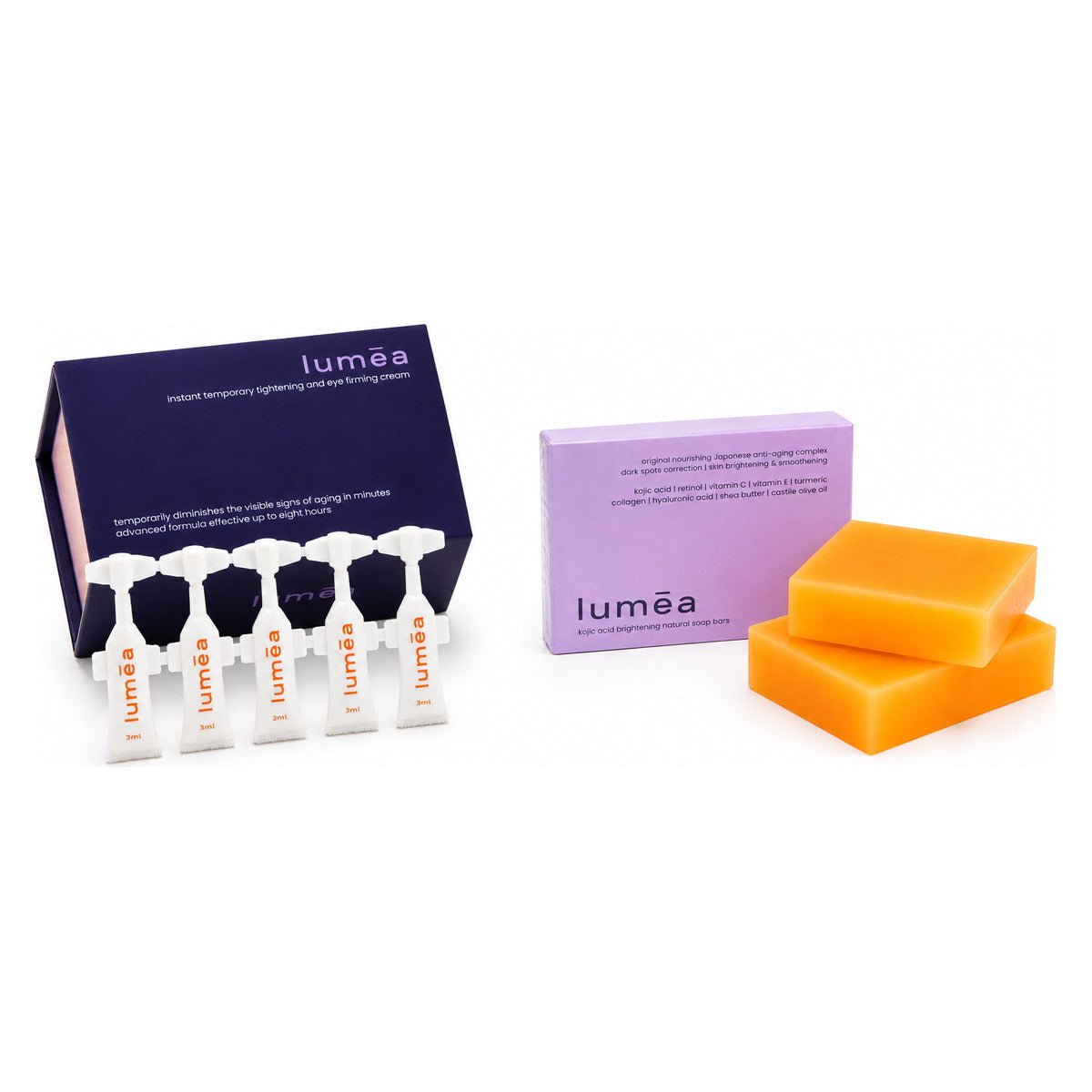
If you would rather not build a routine from separate products, lumēa's Dark Spot Remover combines kojic acid with retinol, vitamin C, hyaluronic acid, collagen, turmeric, shea butter and olive oil in a cleansing bar for face and body — lathered on damp skin, left about 30 seconds, then rinsed off. Never leave a cleansing bar sitting on skin longer than that. Patch test on a small area first, since kojic acid can irritate and can cause contact sensitivity in some people. It also contains retinol, which is generally advised against during pregnancy and breastfeeding — ask your doctor — and which should be introduced gradually, a few times a week at first, since irritation is common early on. Expect changes over weeks, not days.
Prevention decides whether they come back
Pigmentation is a maintenance category, not a one-off project. Sunscreen every morning, reapplied outdoors. A hat and shade during the strongest hours. Treating acne early instead of waiting, and leaving spots alone once they appear. Avoiding the harsh scrubs and over-layered acids that cause the inflammation you are trying to prevent. Removing whatever is rubbing. Skin that is protected consistently keeps the ground it gains; skin that is protected only in July loses it again by September.
Frequently asked questions
How long does it take for dark spots to fade?
Recent post-acne marks in the upper layers often lighten noticeably over one to three months with consistent care and sun protection. Older sun spots and deeper pigment take considerably longer — several months at minimum, and some never clear completely. Anyone promising a fortnight is selling something.
Can dark spots disappear on their own?
Post-inflammatory marks frequently do, given time and shade, because the pigment is carried up and shed with normal turnover. Sun spots and hormonal patches rarely resolve on their own, and tend to deepen with continued exposure.
Why do my dark spots keep coming back?
Almost always because the trigger is still present. Melanocytes in an area that has pigmented before stay primed to do it again, so those exact patches respond faster to the next round of sun, heat or irritation. Daily sun protection is what breaks the cycle.
Are freckles the same as dark spots?
Not quite. Freckles are small, genetically determined, appear early in life, and darken and lighten with the seasons. Sun spots are usually larger, arrive later, have firmer edges and do not fade in winter. Both are melanin, but they behave differently.
Can I use kojic acid and retinol at the same time?
Many people can, and the pairing is sensible — one slows pigment production, the other speeds its clearance. Introduce them one at a time rather than together, start with a few uses a week, and reduce frequency if skin becomes tight, flaky or red. Retinol is generally advised against in pregnancy and breastfeeding; check with your doctor. Our breakdown of the individual actives covers how to combine them without overloading the skin.